This talk is about using simple values (as opposed to complex objects) not just for holding data, but also as the boundaries between components and subsystems. It moves through many topics: functional programming; mutability's relationship to OO; isolated unit testing with and without test doubles; and concurrency, to name some. The "Functional Core, Imperative Shell" screencast mentioned at the end is available as part of season 4 of the DAS catalog.
The Mikado Method is a book written by the creators of this process. It describes a pragmatic, straightforward, and empirical method to plan and perform non-trivial technical improvements on an existing software system. The method has simple rules, but the applicability is vast. As you read, you'll practice a step-by-step system for identifying the scope and nature of your technical debt, mapping the key dependencies, and determining the safest way to approach the "Mikado" -- your goal.
The C4 model is an easy to learn, developer friendly approach to software architecture diagramming. Good software architecture diagrams assist with communication inside and outside of software development/product teams, efficient onboarding of new staff, architecture reviews/evaluations, risk identification (e.g. risk-storming), threat modelling, etc.

Un schéma d'hexagonal architecture plus clair que celui-ci qu'on peut trouver un peu partout.
Source : https://stackoverflow.com/questions/66785439/ddd-hexagon-should-the-domain-layer-ever-talk-to-the-infrastructure-dal-laye
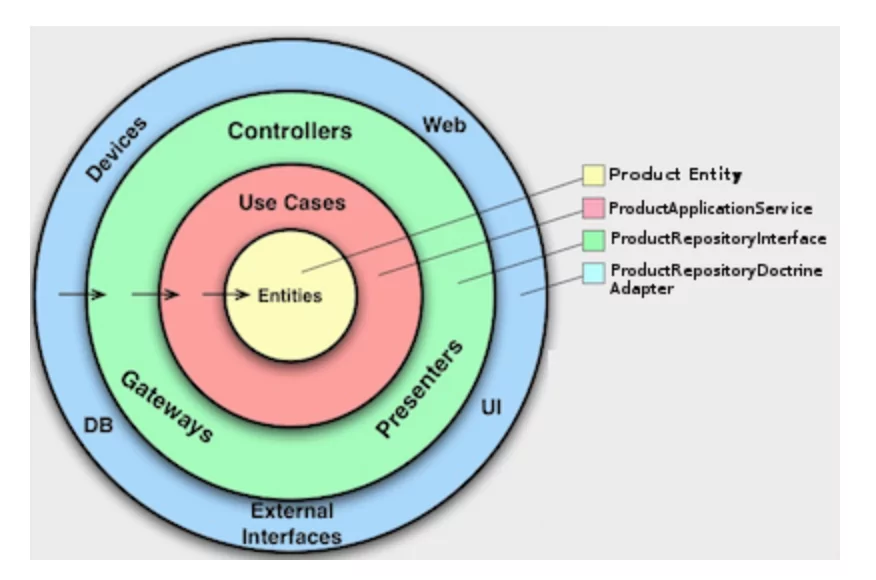
The Full-stack Software Design & Architecture Map | Khalil Stemmler
Une approche permettant de structurer son projet Front en se basant sur des bonnes pratiques.